When South Korean President Yoon Suk Yeol visited Prague in September 2024, the two countries signed a dozen memoranda of understanding, but one deal stood out: a $23 billion contract for Korea Hydro & Nuclear Power to build two reactors at Dukovany. That single agreement overshadowed years of incremental trade growth and signaled a deeper shift. South Korea and the Czech Republic。once linked mainly by automotive and electronics supply chains, are now betting on energy security and technological sovereignty.The numbers tell part of the story. Bilateral trade hovered around $3.5 billion in 2023, with Korea exporting cars, batteries。and machinery while the Czech Republic sent machine tools, turbines, and precision instruments. But trade volume misses the point. Korean firms like Hyundai and Nexen Tire have poured billions into Czech plants, turning the country into a European manufacturing hub. I saw this firsthand in Ostrava: a Hyundai parts supplier operating three shifts, its parking lot filled with Škoda and Kia models side by side. That kind of integration doesn't show up in quarterly reports.What's driving the relationship now is less about cost and more about shared risk. Both countries sit on the front lines of supply chain reconfiguration—Korea facing North Korean threats and Chinese pressure, the Czech Republic navigating EU green rules and Russian energy fallout. The nuclear deal is the obvious example, but there's also cooperation on hydrogen buses, smart grids。
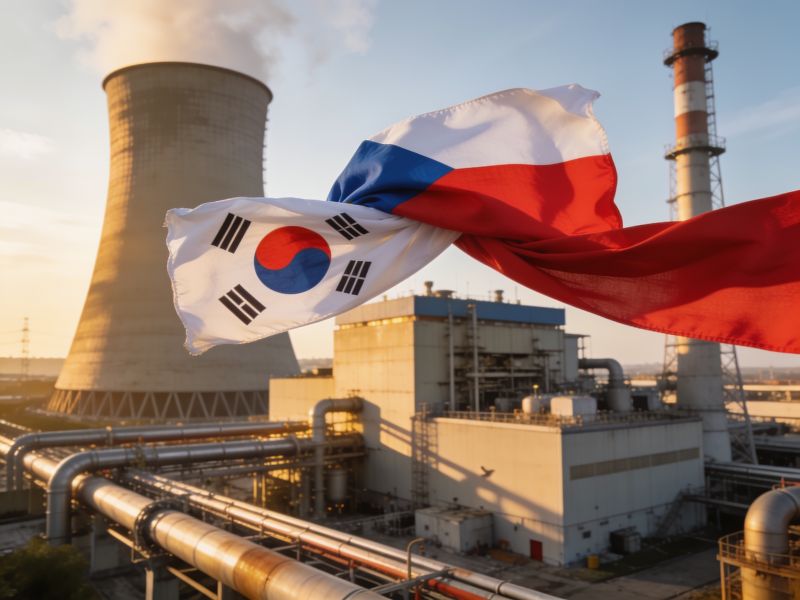
and AI research. A Czech diplomat in Seoul told me the phrase 'value-based partnership' gets used a lot, and while it sounds like Brussels jargon, it actually reflects something real: Korean battery makers need Czech lithium processing capacity;Czech engineering firms need Korean scale.Not everything is smooth. Korean investment in the Czech Republic has drawn criticism for relying on state incentives。
and the nuclear contract faced pushback from French and American competitors. Cultural differences also persist—Korean managers in Prague often complain about slower permitting processes, while Czech workers sometimes find Korean work hours intense. Still, these frictions are manageable compared to the strategic upside. When I visited the Czech town of Třebíč near the Dukovany site, locals expressed cautious optimism. 'We've been waiting decades for this,' a café owner said. 'Koreans move fast. We're not used to that.'The South Korea-Czech Republic axis remains underreported, but it's one of the more consequential middle-power partnerships in Europe today. It's not a bromance;it's a calculated alignment. As EU tariffs on Chinese EVs reshape the auto industry and Russia's war disrupts energy markets, both Seoul and Prague need reliable partners who understand the new geopolitical arithmetic. That doesn't guarantee smooth sailing—but it does explain why a Korean construction crew is now a familiar sight in the Czech countryside.